Decision Support
ADHD decision paralysis
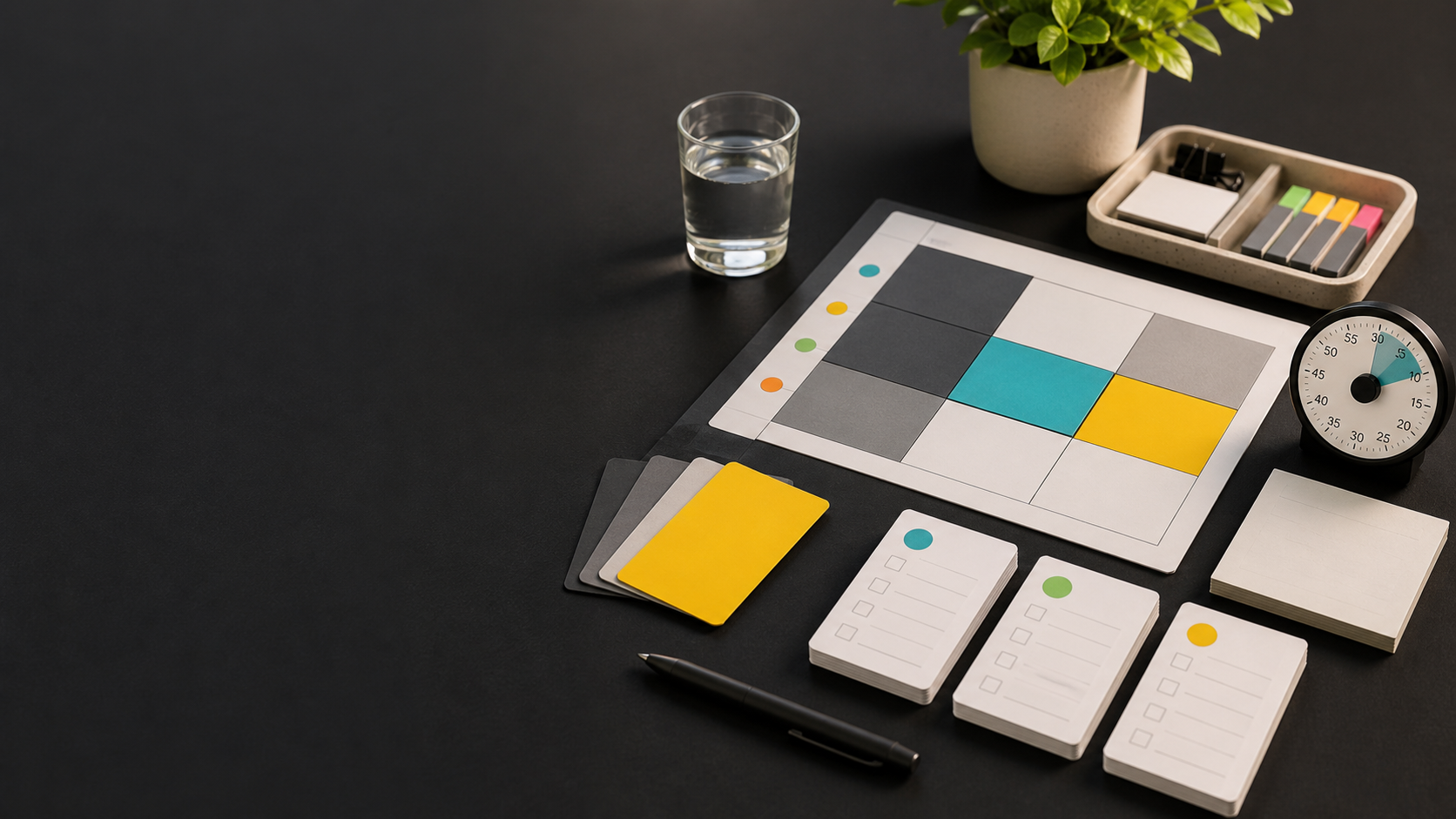
A visible parking system for options, waiting costs, next actions, and low-stakes choices.
ADHD decision paralysis can look like procrastination, but it often feels different on the inside. You are not doing nothing. You are carrying too many options, consequences, feelings, and possible mistakes at the same time.
The decision is usually bigger than it looks
A small choice can hide a pile of invisible work: compare options, imagine outcomes, predict other people's reactions, estimate time, avoid regret, and choose the perfect version before starting.
The first fix is to make the real decision visible. Do not write "decide website." Write "choose the first article topic for today" or "pick the cheaper tool for the next month."
Name the real decision
Write the choice in one sentence so it stops changing shape in your head.
Limit the options
Keep two or three realistic choices. Park the rest before comparing.
Name the waiting cost
Ask what becomes harder if this choice stays open another day.
Use a good-enough rule
Pick the rule before the emotion spikes: cheapest, fastest, reversible, or already available.
Park the rest
Move later decisions into one list so they stop hijacking the current one.
A decision support does not remove uncertainty. It makes uncertainty small enough to move with.
The decision parking reset
Use this when a choice keeps looping and the day is starting to disappear.
- What is the exact decision in one sentence?
- Which options are real, and which are just mental noise?
- What information is actually missing?
- What is the cost of waiting?
- Is this reversible, partially reversible, or hard to reverse?
- What next action happens after the choice?
Put the choice on paper before comparing it. The free decision reset gives you one printable place for the real decision, live options, a good-enough rule, the next move, and the things that are not for today.
Use the free decision resetSeparate reversible from irreversible
Many decisions feel permanent because ADHD can make regret loud before anything has happened. Sort the choice first. If the decision is reversible, the rule can be lighter.
For reversible choices, use a time box: "I choose for the next two weeks." For harder-to-reverse choices, define the missing information and the next step to get it.
Use a default for low-stakes choices
Low-stakes choices can steal high-stakes energy. Create defaults for meals, clothes, errands, work setup, writing order, and admin tasks. A default is not a prison. It is a starting point.
When the decision does not matter much, let the default decide. Save the deeper thinking for choices with real consequences.
Make the next action visible
A decision is not finished until the next action is visible. If you choose a tool, the next action may be "open account." If you choose a task, it may be "write the first rough sentence."
Without the next action, the decision can turn into another open loop.
FAQ
Why does ADHD make decisions feel hard? ADHD can make decisions feel hard because options, consequences, emotions, time pressure, and working-memory load all compete at once.
How do I stop ADHD decision paralysis? Reduce the options, write the real decision in one sentence, name the cost of waiting, choose a good-enough rule, and park low-stakes choices outside your head.
What is a decision parking system? A decision parking system is one visible place for choices that are not ready yet, so they stop looping in working memory while you gather information or wait for the right time.
How do I know which decision to make first? Start with the decision that unlocks another person, a deadline, a payment, a work block, or a task that cannot move until the choice is made.
Which Dopamine Friendly Systems book fits decision paralysis? Building Executive Function That Actually Works fits decision paralysis because it covers external planning, priority filters, decision supports, working memory, and follow-through loops.