
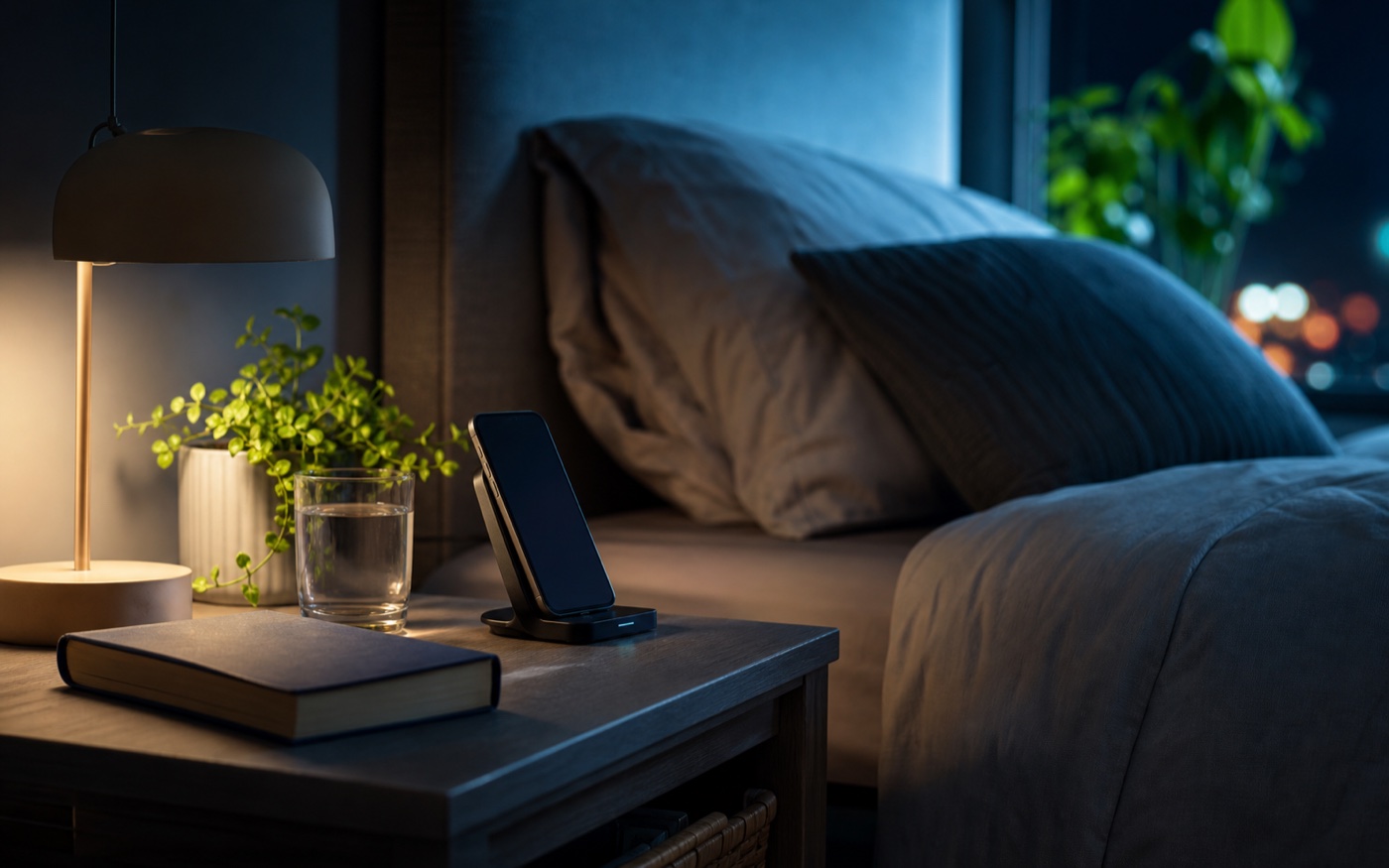
Free ADHD Tool
ADHD bedtime reset
Close the day enough. Lower the input. Give sleep one visible door.
Use this when you know you want to sleep but the transition still feels irritating, the phone is too available, or tomorrow keeps trying to get planned from bed. You do not need a polished night routine. You need a smaller handoff from a loud day to a quieter one.
Use it on this page, copy it into a note, or print it. There is no sleep score, no signup, and no requirement to do every step before bed counts.
The 10-minute bedtime reset
A small sleep handoff
Make the next step toward bed more obvious than one more loop.
Settle the body first
Before asking for self-control, check the practical stuff: water, bathroom, medication, snack, temperature, shower, stretch, or one comfort cue.
Park tomorrow
Write one first action for tomorrow, one loose loop, and one thing you are explicitly not solving tonight. Keep it small enough to see at a glance.
Lower the pull
Move the phone to its charger or tray, lower one input, and choose a simpler landing. This is a wall with somewhere to go, not a punishment.
Use one bed cue
Choose a repeatable final signal: lamp off, eye mask, audio, blanket, book open, or the same one-line note. Make the cue easier than deciding again.
Minimum valid bedtime reset
Take care of one body need, move the phone, write one line for tomorrow, and lower the lights. That is a real rescue version, not a failed full routine.
What it can look like
Write: "Open the calendar, then choose one task." Put the note near the mug or laptop. You do not need a complete plan before sleep gets permission to begin.
Put it in the charger across the room or in a tray. Choose familiar audio, an eye mask, or one paper chapter as the replacement. The phone boundary needs an actual landing.
Lower the light and choose a low-input activity that can end: audio, a puzzle, a shower, gentle stretching, or a book. The goal is not to force sleep; it is to stop adding stimulation.
Use only the rescue version: bathroom, water, charger, one note, lower lights. Tomorrow gets a small repair instead of a courtroom speech about the night.
Start before bedtime feels urgent
For many adults with ADHD, bedtime is hard because the first handoff happens after decision energy is gone. The best version starts with one visible signal before the tired part of the night: a timer, a lamp change, a charger move, or a chosen reward that has a real end point.
The point is not to create a strict clock. It is to make the transition less blank. When the next move is already in view, bedtime does not need to compete with every unfinished task, notification, and possible source of novelty.
Give the evening a reward before bed has to steal one
Sometimes the delay is not really about sleep. It is the first point in the day that feels private, quiet, or self-directed. A hard rule alone can make the night feel even more worth defending.
Choose one low-pressure reward that happens before the final cue: a warm drink, a shower, a chapter, music, a porch minute, a planned snack, or one episode with a visible stop. The reward does not have to be virtuous. It has to be chosen soon enough that it does not consume the whole night.
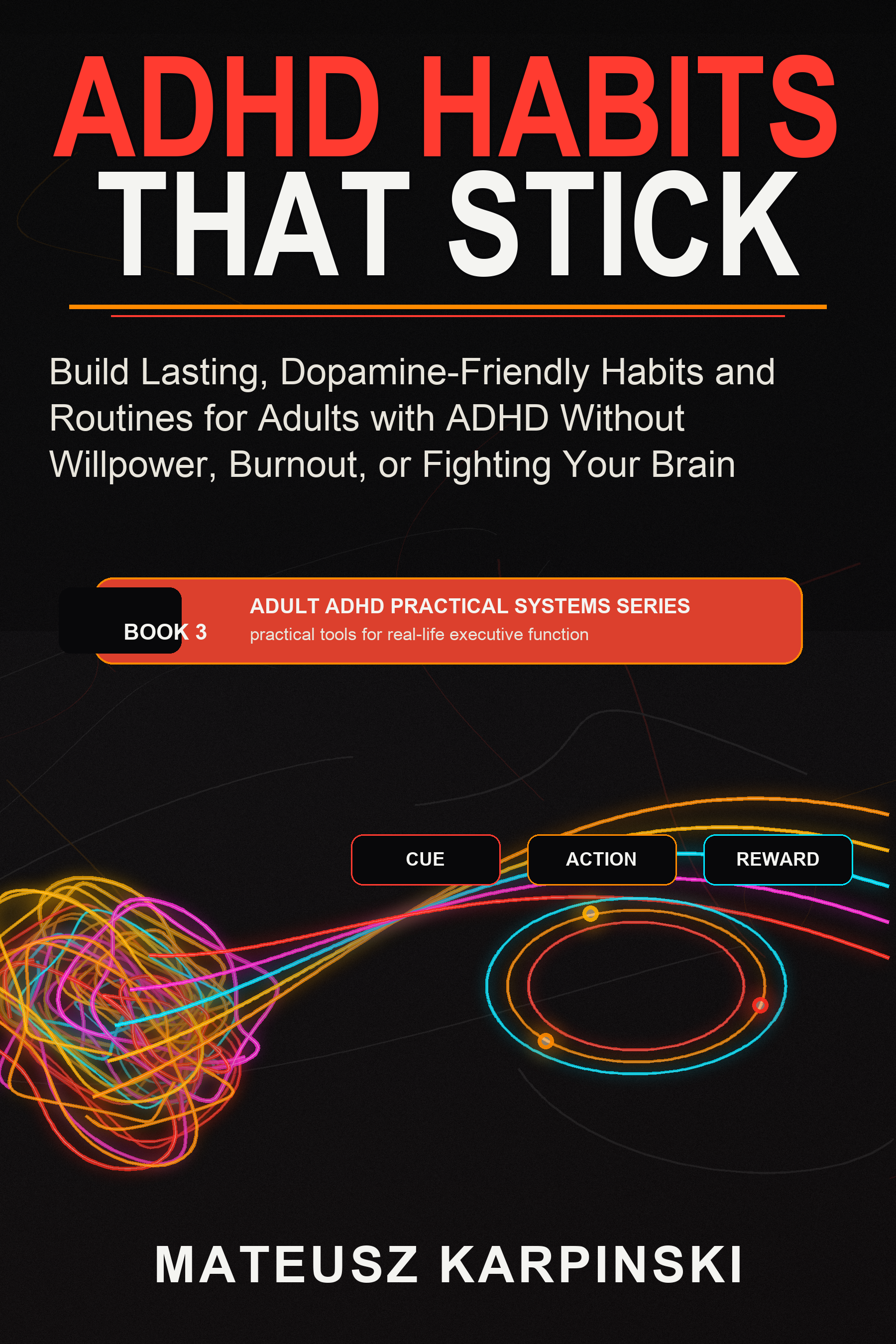
When you want the routine to survive real weeks
Book 3 turns the bedtime cue into a restartable habit system.
ADHD Habits That Stick builds on this small reset with cue trays, tiny starts, cue-action-reward loops, and routine designs that can return after missed nights instead of collapsing under them.
FAQ
What is an ADHD bedtime reset?
A small, repeatable handoff from the end of the day toward sleep: settle a practical body need, park the next day, lower stimulation, move the phone out of the bed zone, and use one clear cue for the next step.
How do I start a bedtime routine when I am already exhausted?
Use the rescue version: one body-care action, move the phone to its charger, write one line for tomorrow, and lower the lights. Four visible moves beat waiting for enough energy to do a perfect routine.
What should I do if I am not tired at bedtime with ADHD?
Do not force a large routine. Lower the input, keep the phone out of the bed zone, choose a low-light activity or audio, and use the same final cue when you are ready. The aim is a gentler transition, not strict sleep performance.
What if I stay up late again?
Use the repair line rather than starting over with a punishment plan. The next night, return to the smallest version: body, charger, one note, lower lights, bed cue.