

Free ADHD Tool
ADHD bill reset
Open one money task. Leave with one clear next move, not a full financial audit.
Use this when a bill, balance, or unread notice has become emotionally expensive to look at. The point is not to make a perfect money plan. It is to reopen one item, give it a next action, and make returning less difficult.
Use it on this page, copy it into a note, or print it. No email gate, no download gate, and no requirement to resolve every bill in one sitting.
The 10-minute bill reset
One bill at a time
Make the next decision visible before you ask yourself to solve everything.
Choose one item
Open one bill, provider email, account, or notice. Pick the one you can name, not the whole pile.
Name the current state
Write only what is visible now: due date, current amount, unread notice, unclear status, or an account you need to open.
Make one next move
Choose an action small enough to do or schedule: check the amount, set a payment date, pay, or contact the provider for information.
Leave a return cue
Put the next check where you will see it: calendar, desktop note, phone reminder, paper tray, or a named item in your task list.
A useful finish line for today
Today counts when this bill has a current state, one next action, and a visible cue. You do not need to finish a full budget or solve every money problem to close this reset.
What it can look like
Electricity provider email that has been unread since last week.
I know it is about a bill. I have not opened it, so the current amount and date are unclear.
Open the email, write the due date and current amount, then decide whether I need to pay, schedule, or ask the provider a question.
Calendar reminder tomorrow at 5:30 pm called: check electricity bill next step.
The bill is no longer a blank threat. Its current state and next move are visible.
Keep the first session narrow
Avoidance grows when opening one bill turns into an unplanned review of every account, missed goal, or old decision. Let the reset be deliberately narrow. One item can be enough to restore contact with the system.
If you need to understand a bill, cannot make a payment, or want to ask what options are available, write "contact provider" as the next step. You do not need to decide everything before you reopen that conversation.
This is an educational organization tool, not financial, legal, or debt advice. For a disputed bill, collection notice, or a situation that needs specialist help, contact the provider or qualified local support.
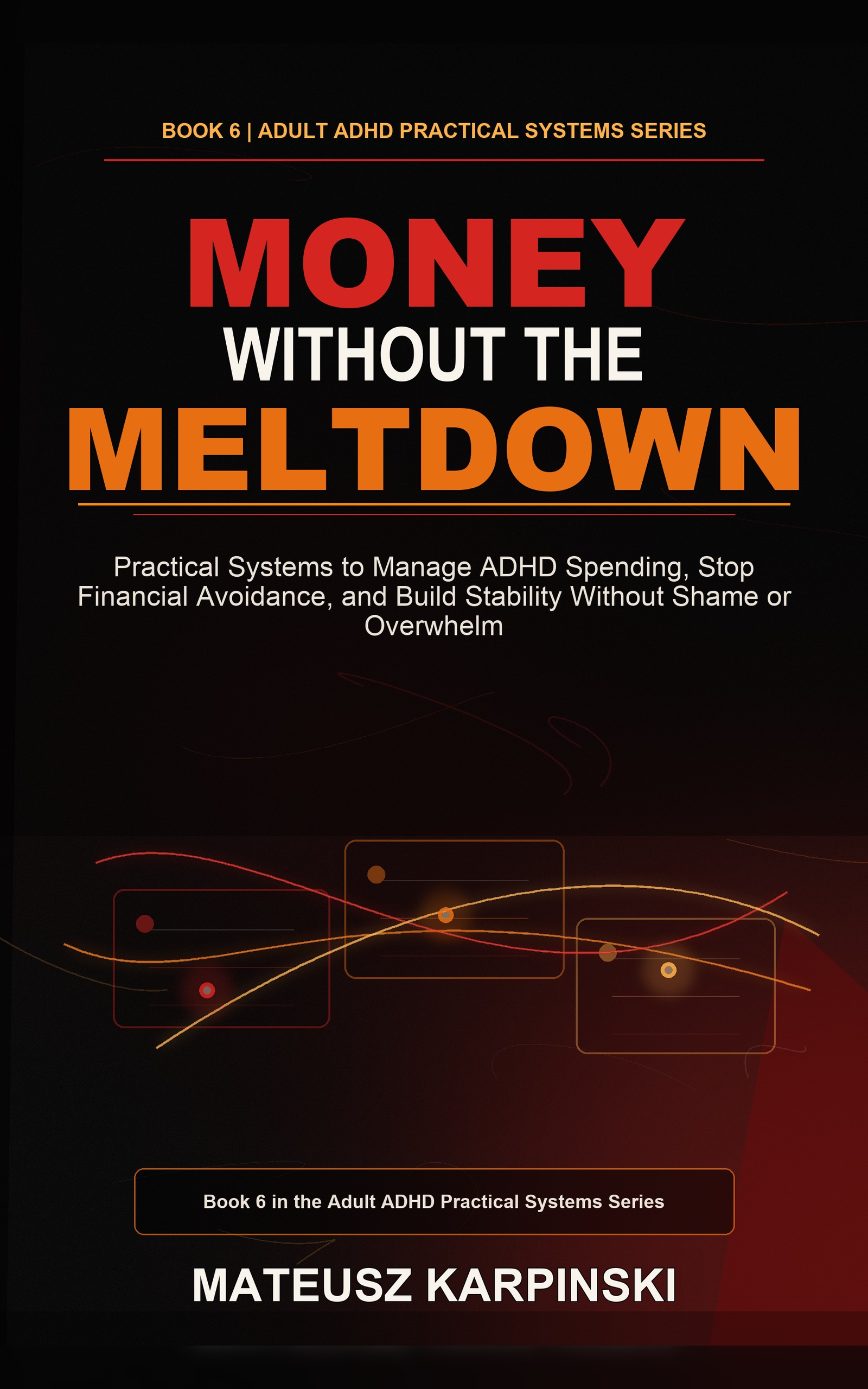
When money avoidance keeps returning
Book 6 builds the bigger money system.
This reset handles one hard-to-open item. Money Without the Meltdown adds bill visibility, spending pauses, avoidance resets, and money check-ins designed for weeks when looking feels harder than it should.
FAQ
What is an ADHD bill reset?
A short, neutral way to reopen one bill or money task. It names the current state, one next action, and one cue for returning without trying to solve every financial decision at once.
What should I do if I have avoided bills for weeks?
Start with one source: one bill, account, or notice. Write the current status and the next action in plain language. Contact the provider if you need to understand the current amount, due date, or available options.
Do I need to pay every bill during the reset?
No. The first job is to reopen contact with one bill and make the next action visible. Payment, a scheduled payment, or a provider conversation can be separate next steps.
Is this financial advice?
No. This is an educational organization tool, not financial, legal, or debt advice. For an error, a disputed bill, a collection notice, or a payment problem, contact the provider or qualified local support.