
Free ADHD Tool
ADHD waiting mode reset
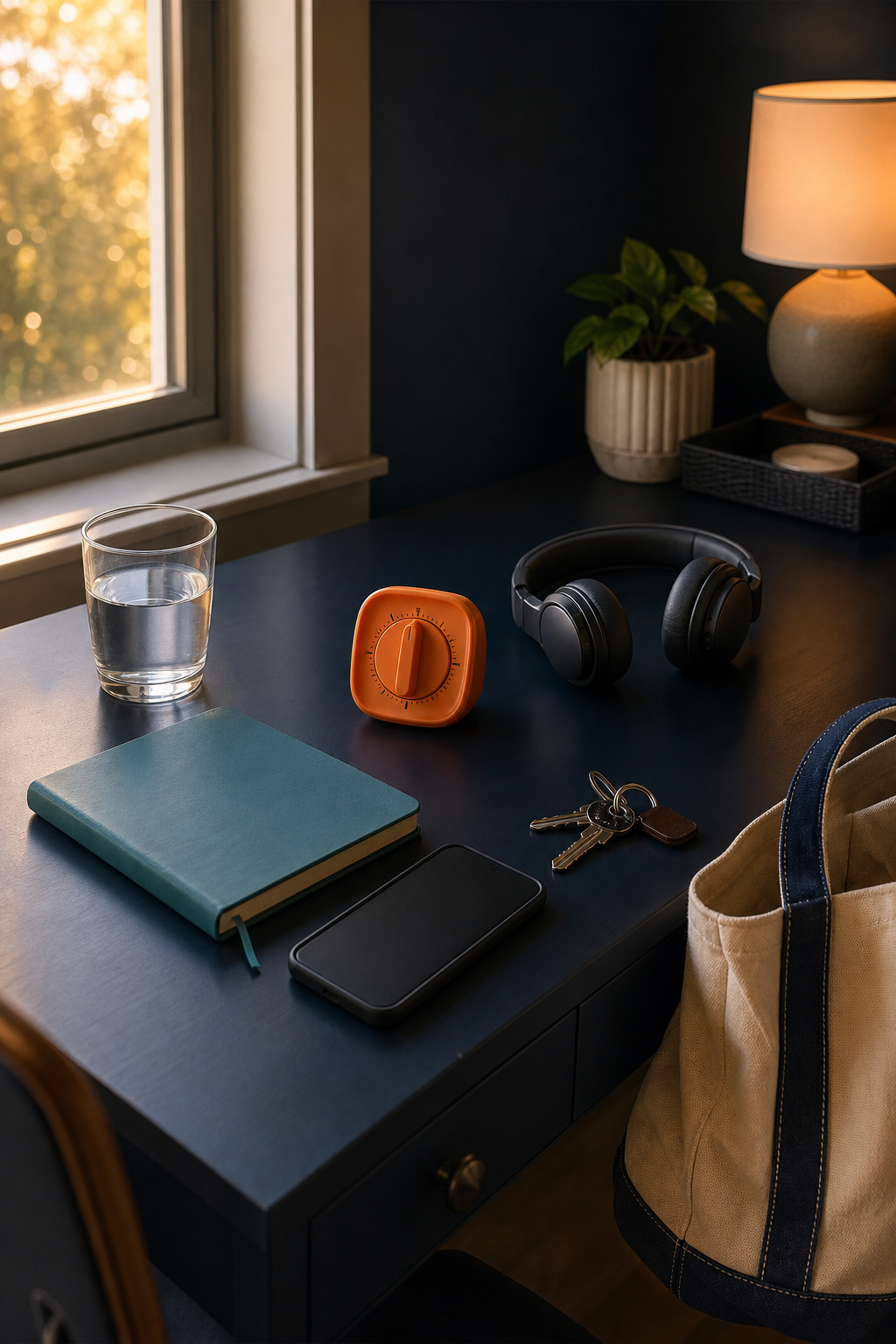
Give the time before the next thing a boundary, one small job, and a way back.
Use this when a later appointment, pickup, call, delivery, deadline, or expected event seems to swallow the time before it. You do not need to force a fully productive day. You only need to make the real return point visible enough that the waiting window can hold one small, stoppable thing.
Use this page, copy the prompts into a note, or print it. It is an educational organization tool for time and transitions, not medical, travel, legal, or professional advice.
Make the waiting window real
One return cue, one contained activity
The later event does not need to stay in charge of every minute before it. Give preparation a real edge, then choose a small enough thing to do until that edge arrives.
Name the fixed point
Write the event and the actual preparation point, not just the start time. Include leaving, setup, finding the link, travel, or any instruction you need to follow.
Mark the safe window
Write what is true before preparation has to begin. A real boundary stops the event from becoming an all-day background alarm.
Choose one contained thing
Pick an activity with a clean stopping point: food, shower, short walk, rest, one admin task, one small chore, or a limited work action. Make it easy to leave unfinished.
Put the return in the room
Set an alarm or other cue, then place the items you need where you will meet them. The return should not depend on remembering why you were waiting.
A good enough finish line for the wait
The window worked if you made the fixed point easier to meet and did not have to hold it in your head every minute. Resting, eating, showering, or doing one small task can all count. The goal is a reliable return, not squeezing maximum output from the gap.
Choose a task that can be stopped kindly
Make food, take a shower, put away one small category, answer one message, choose clothes, do one short work task, listen to something, or sit with water and rest.
Stay close to the exit or keyboard, put the needed items in one place, use a single alarm, and pick something you can stop in one breath.
Ask whether it can stop without a painful reconstruction. If not, save it for a window with a more reliable ending and use a smaller, closed task instead.
Do one body support first: water, snack, bathroom, stretch, slower light, or a short walk. The nervous system may need a landing before it can use a waiting window.
Update the return cue and the next step. The reset is still working if the event moved, cancelled, or needed a different preparation route.
Waiting is a transition, not an empty gap
Waiting mode can make the later event feel more immediate than the present moment. The brain keeps scanning: do I have enough time, will I forget, should I start something, what if I get absorbed, what if I am late? A clear preparation edge and an external return cue answer those questions outside your head.
Do not use the window to prove that you can be productive despite the pressure. A short rest or simple care task can be the right use of the time. The useful part is that the event has a visible route back into your attention without borrowing the whole day.
This is an educational organization tool, not medical, travel, legal, or professional advice. Follow the relevant appointment, transport, workplace, school, or care instructions and use the timing and preparation that your situation requires.
When time keeps disappearing around the transitions
Book 1 gives the whole day more visible edges.
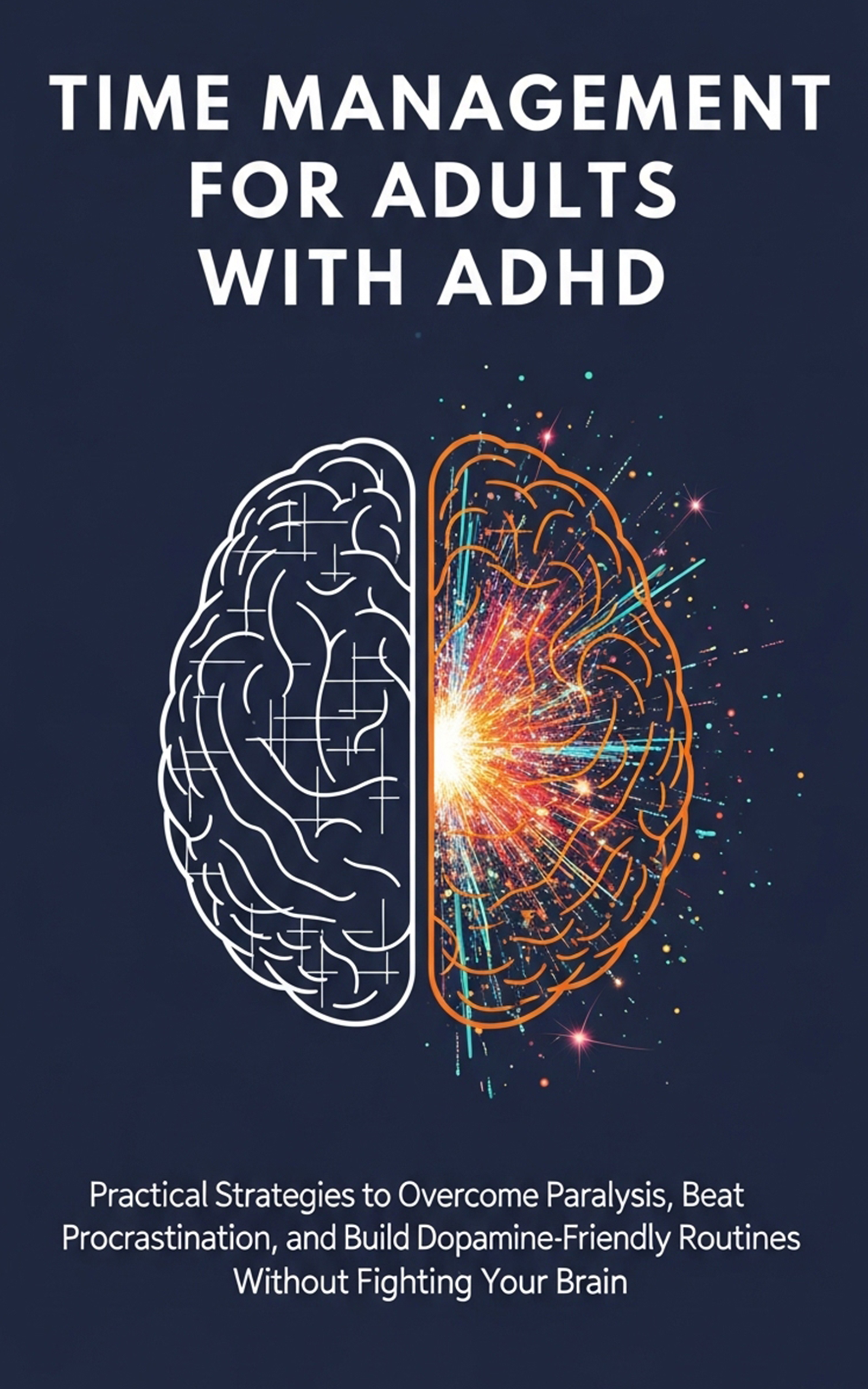
This reset handles one waiting window. Time Management for Adults with ADHD expands that into anchors, buffers, task doorways, realistic planning, late-start recovery, and return points that survive normal interruptions.
FAQ
What is ADHD waiting mode?
It is the feeling that you cannot begin anything else before a later appointment, call, pickup, delivery, or expected event. The event can stay open in working memory and make the time before it difficult to use.
How do I stop losing the whole day while waiting for an appointment?
Name when you truly need to begin getting ready, choose one contained activity that can stop easily, and set a cue to return. Put the required objects where you will see them so preparation does not depend on holding the appointment in your head all day.
What is a good activity for ADHD waiting mode?
Choose something with a clean stopping point and low restart cost: one small chore, a short work action, a shower, food, a walk close to home, a simple body reset, or planned rest.
Is this medical, travel, or professional advice?
No. This is an educational organization tool, not medical, travel, legal, or professional advice. Follow the relevant appointment, transport, workplace, school, or care instructions and use the timing and preparation that your situation requires.