
Work Rewards
ADHD dopamine menu for coding days
A reward menu for the moments between tickets, after meetings, during debugging, or right before the next task starts.
A dopamine menu is not a list of wholesome hobbies. On a coding day, it has to work in the awkward little gaps: after the meeting, before the pull request, ten minutes into debugging, or while your brain is looking for a reason to open a feed.
The reward has to match the job
The mistake is making one giant list of "better choices" and hoping it works for every urge. It usually does not. If your brain wants novelty, a warm drink may not touch it. If it wants comfort, opening another productivity tool can feel like being scolded by software.
Start with the job the urge is doing. Then choose the smallest reward that can answer that job without stealing the rest of the workday.
Quick check: "What job is this urge doing?" Novelty, comfort, movement, connection, sensory input, completion, or task doorway.
A small coding-day menu
Keep the first version boring and reachable. If it needs shoes, a login, a clean desk, or a heroic mood, it is not a first-line reward.
Novelty
Change playlist, switch editor theme for one session, read one short technical note, or try a tiny refactor.
Comfort
Warm drink, hoodie, familiar audio, lower lights, planned snack, or a softer chair for one block.
Movement
Stand up, stairs, wrist stretch, neck stretch, one song walk, or three minutes outside.
Connection
Send one concrete question, share the rubber-duck summary, or message a friend without turning it into a chat spiral.
Sensory input
Cold water, gum, sunlight, clean shirt, pressure, different chair, or changing the room temperature.
Completion
Close five tabs, delete stale notes, commit one small thing, clear one surface, or name what is now done.
Task doorway
Open the ticket, write the ugly first line, name the next function, add a failing test, or write the next physical action.
Put it where the loop starts
A menu buried in a notes app will not beat the app icon. Put the first version next to the keyboard, in the top of the daily note, or as a small desktop note. It should be visible before the scroll becomes the only plan in the room.
The menu does not need to be pretty. It needs to interrupt the moment where the day turns from "one short break" into "I lost forty minutes and now I feel worse."
Use it between tasks, not only during failure
The best time to use the menu is often before the crash: after a standup, after reviewing code, after merging a pull request, or right before switching from a bug to a new ticket.
That is the point where the brain is asking for a transition. Give it one on purpose. Then write the next doorway before you step away: "open ticket 214," "rerun test," "answer the review comment," or "make the empty function exist."
When you only know "not that"
Sometimes the need is not obvious. You just know you do not want the task, the chair, the screen, or the same loop again. Start with the body first: water, light, stand up, different chair, wrists, neck.
Then pick the smallest task doorway. Not the whole feature. Not a perfect plan. One visible next contact with the work.
Book path
If this is your main friction
Start with the visible reward system, then add the workday supports around meetings, task switching, and focus blocks.

Dopamine Menu Journal for ADHD Adults
Best for building visible reward menus, low-energy choices, focus tracking, and return points.
View paperback on Amazon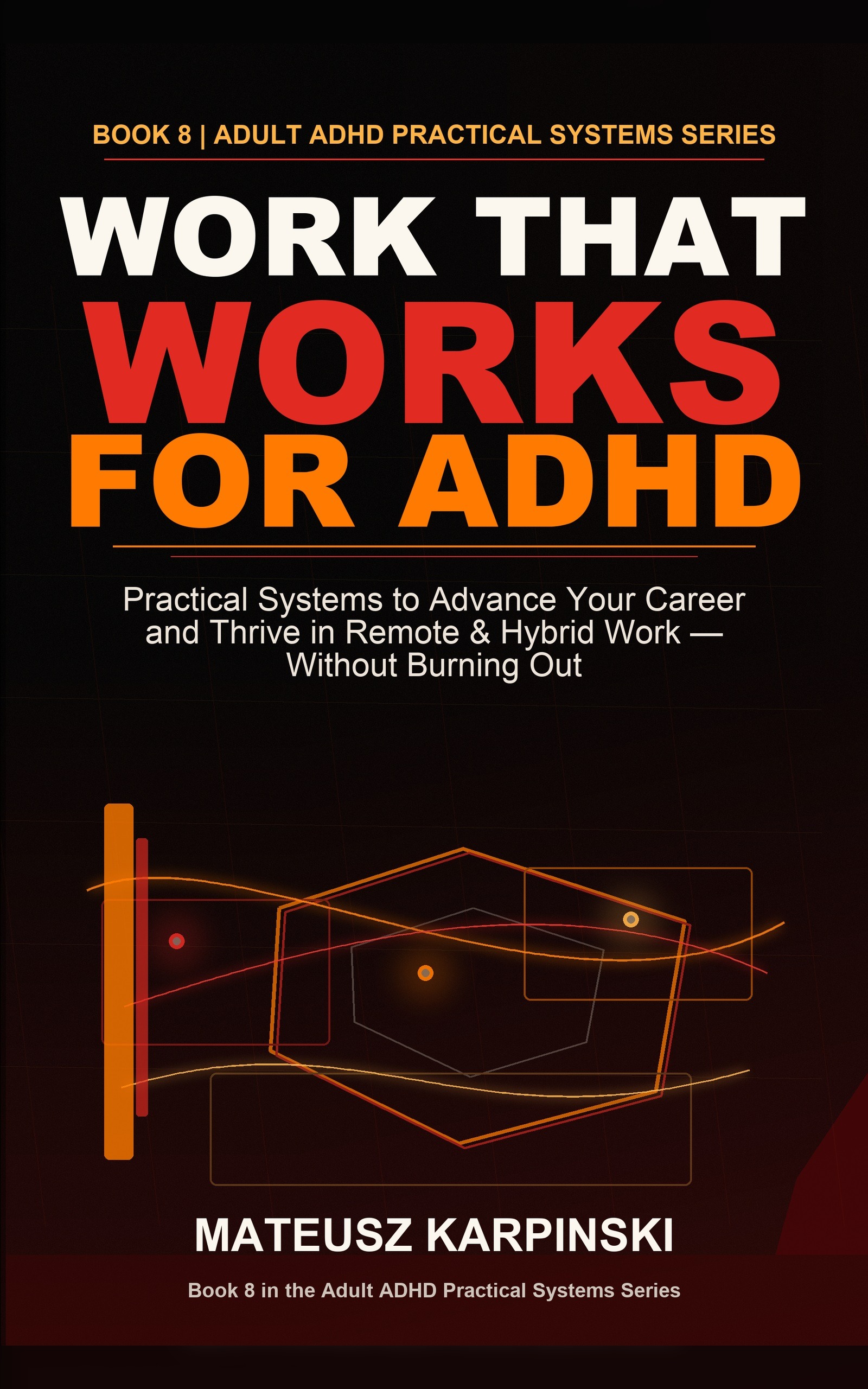
Work That Works for ADHD
Best for focus rails, meeting recovery, task handoffs, remote work, and career energy.
View Kindle on AmazonFAQ
What is a dopamine menu for coding days? It is a short list of low-friction rewards sorted by the job they do during a workday: novelty, comfort, movement, connection, sensory input, completion, or task entry.
Why sort rewards by job instead of by healthy or unhealthy? Because the reward has to answer the need behind the urge. A comfort reward will not always help a novelty craving, and a productivity tool will not always help a tired brain transition between tasks.
What if I do not know what reward I need? Start with the lowest-friction body option: water, light, standing up, changing chairs, stretching your wrists, or taking one short walk. Then pick the next task doorway.
Which book fits this system? Dopamine Menu Journal for ADHD Adults is the closest workbook for building visible reward menus. Work That Works for ADHD is the workday follow-up for meetings, focus, and task switching.