Free ADHD Tool
ADHD food reset
Make the next meal easier without turning the next 24 hours into a meal-planning project.
Use this when food has become another chain of decisions: nothing sounds right, the cupboard feels unhelpful, shopping keeps moving to later, or the next meal is vague enough to disappear. The job is not to eat perfectly. It is to make one workable option easier to meet.
Use this page, copy the prompts into a note, or print it. It is a practical planning tool for ordinary daily friction, not a diet, meal plan, or nutrition prescription.
Build the next 24 hours, not the ideal week
One meal doorway at a time
Choose what makes the next food decision smaller. Tomorrow can stay off the table until the next step is visible.
Name one easy option
Choose something that fits your own needs and is realistic with your current energy, time, equipment, and access.
Remove one barrier
Find the part that makes the option disappear: a missing item, a closed cupboard, a dirty bowl, an unopened app, or too many choices.
Make a tiny restock
Write the smallest set of items that would make the next day less expensive. Keep the list personal and short.
Leave a visible food cue
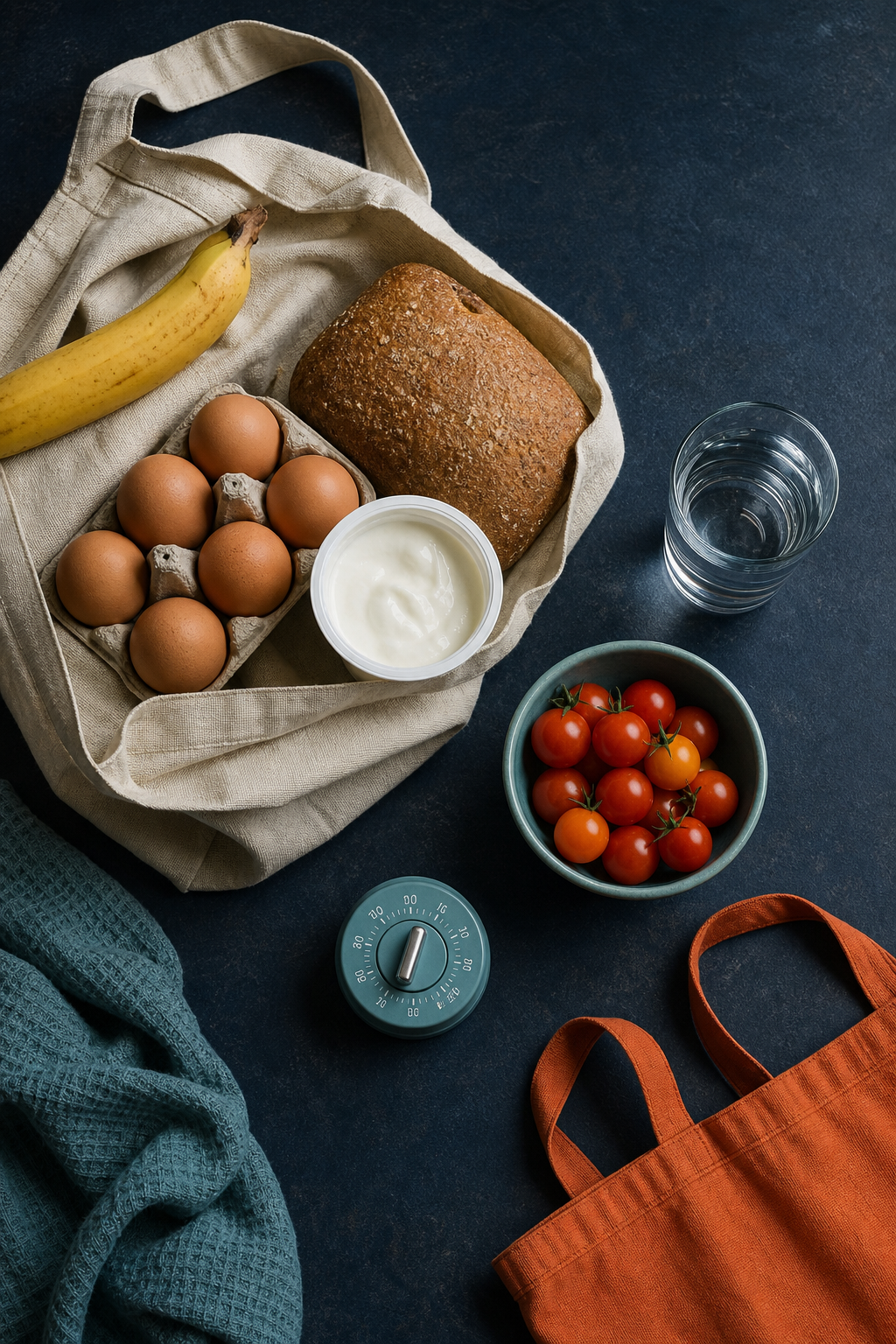
Make the next move meet your eyes: put the tote by the door, move an item forward, set a reminder, or keep the choice at the top of a note.
Use a personal default before your brain asks for novelty
A default is not a rule about what you should eat. It is one familiar option that needs fewer decisions when energy is low. Keep it adjustable, personal, and easy to replace when it stops working.
Keep the food task in its actual lane
Choose one thing that can happen next. Move the ingredient, bowl, or appliance into view before you decide anything else.
Make a list for only the next meal or day. Put the tote, keys, or delivery app at the start of the route, not at the end of a bigger reset.
Choose the easiest acceptable version available to you. The point is to reduce the number of steps between noticing hunger and having an option.
Use an existing anchor such as a break, the end of work, getting home, or a regular alarm to make the food question visible again.
Make the ask concrete: could you add one item, pick up one thing, sit with me while I order, or tell me which option is easiest right now?
Food does not need to earn its place on a hard day
When the day has already used your attention, food can turn into a problem of planning, cleaning, money, sensory needs, time, or shame. None of those problems are solved by telling yourself to be more organized. They get more manageable when one real barrier is named and the next move is placed in view.
Let the reset stay small. One available option, one lower barrier, one short restock, and one cue are enough to make the next contact with food less abstract. You can revisit the wider system later, when there is more room for it.
This is an educational organization tool, not nutrition, medical, diagnosis, treatment, or professional advice. For dietary, medical, or other individual guidance, contact an appropriate qualified professional.
When every ordinary need costs too much energy
Book 7 helps protect the energy around the reset.
This page makes the next food step smaller. Burnout Without the Breakdown adds energy budgets, low-demand routines, boundary scripts, and recovery loops for days when basics keep slipping out of reach.
FAQ
What is an ADHD food reset?
It is a small planning reset for the next 24 hours when food decisions, shopping, or preparation have become hard to start. It names one easy option, reduces one barrier, and leaves a cue for the next food-related step.
How can I make food decisions easier with ADHD?
Shrink the decision to the next meal or snack, choose an option you already tolerate and can access, and remove one friction point such as finding a bowl, opening a grocery list, moving an item to eye level, or putting a tote by the door.
What should go on a low-effort grocery list?
Choose items that fit your own needs and are easy for you to use. This tool focuses on a small personal restock for the next day rather than a perfect meal plan, a strict diet, or a one-size-fits-all list.
Is this nutrition or medical advice?
No. This is an educational organization tool, not nutrition, medical, diagnosis, treatment, or professional advice. For dietary, medical, or other individual guidance, contact an appropriate qualified professional.