
Free ADHD Tool
ADHD online shopping pause worksheet
Park the cart, name the need, and let a calmer moment join the checkout decision.
Use this when a cart feels urgent after a hard day, a sale countdown is getting loud, or you are about to buy an imagined future version of relief. The purpose is not to shame the purchase or make you promise never to want things. It is a small pause before a tired moment has to decide by itself.
Use it on this page, copy it into a note, or print it. There is no signup. You can still buy the item after the pause; the worksheet simply makes more of the decision visible first.
The 10-minute shopping pause
Pause, not punishment
Give the cart a place to wait while you check what the purchase is trying to do for you.
Park the item
Move it to a wish list, cart, note, screenshot folder, or saved tab. Leave a breadcrumb so parking it does not feel like losing it.
Name the job
What is the item promising right now: novelty, comfort, a quick win, escape, control, identity, convenience, or a future-self fix?
Choose the wait window
Make the delay small and concrete: ten minutes, one hour, one sleep, or the next money check-in. Urgency is information, not a deadline you owe.
Try a close replacement
Choose a low-effort answer to the same job for ten minutes. The replacement does not have to be impressive. It only has to be available now.
One-minute checkout version
Save the item. Set a ten-minute timer. Name one word for the state you want to change. Do one close replacement before reopening checkout.
What it can look like
Save the item and price, then decide whether the sale is adding useful information or only urgency. A deadline can be part of the decision without becoming the whole decision.
Park the cart, drink water, put on familiar audio, and make the return cue visible for tomorrow. The next morning is allowed to have a different opinion about the item.
Write the promised result plainly: more organized, healthier, more creative, more prepared. Then ask whether one smaller action can make contact with that version of you today.
Buy it without turning the decision into a moral test. Record the item, amount, and category in the place you use for money visibility so the next decision starts with real information.
The purchase may be trying to change a state
Online shopping is designed to make novelty, anticipation, and checkout very close. When the day has been loud, the cart can also promise comfort, control, a quick win, or a more capable version of tomorrow. Naming that job gives you more options than arguing with yourself about whether you should want the item.
A pause does not have to eliminate the desire. It just lets the purchase wait long enough for the next question to become visible: what would actually help right now?
Make the wait easy to return from
A vague rule to think about it later usually loses to a saved card and a checkout button. Use a specific wait window and leave a return cue. You might add the item to a wishlist, write the date in a note, take one screenshot, or put a reminder near your regular money check-in.
The goal is not to hide every item. It is to create a route back to the choice without keeping the urge open in working memory all day.
When spending pressure is part of the wider money system
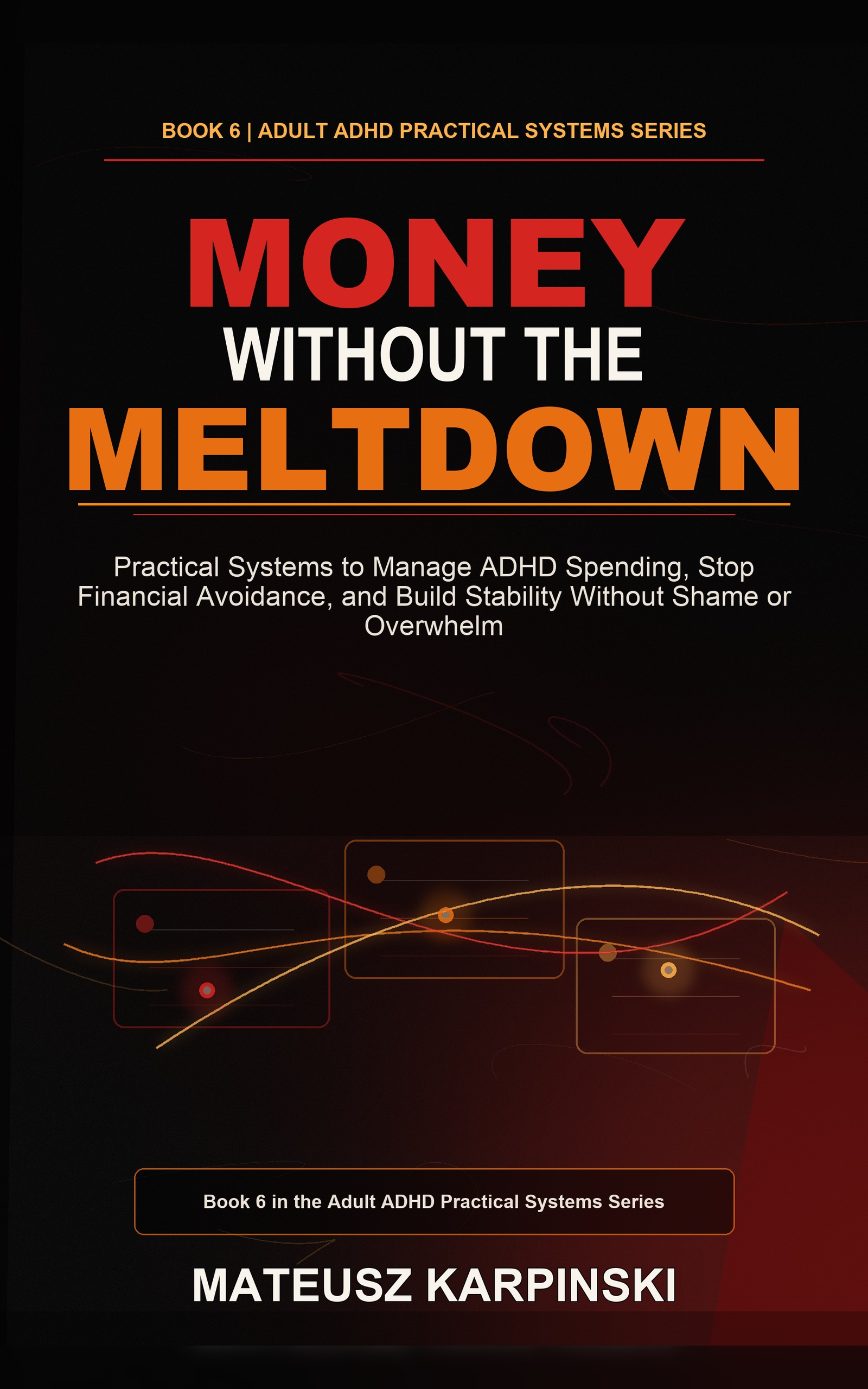
Book 6 turns a single pause into steadier money visibility.
Money Without the Meltdown builds on this worksheet with bill landing zones, flexible spending categories, avoidance resets, regular check-ins, and repair steps that do not rely on shame.
FAQ
How do I pause online shopping with ADHD?
Move the item to a wish list, cart, note, or screenshot folder; name what the purchase is promising; choose a short wait window; and return to the decision in a calmer moment.
Why does online shopping feel urgent with ADHD?
Shopping can offer fast novelty, comfort, control, anticipation, or escape. The item can feel urgent because the state change feels urgent, not always because the purchase needs to happen today.
What should I do when a sale is ending?
Treat the deadline as one part of the decision, not proof that the purchase is necessary. Park the item, note the price, and decide what a useful wait window looks like for you.
What if I still want the item after the pause?
You can buy it. The worksheet is not a rule against wanting things. It is a way to let a calmer version of you see the cost, the category, and the alternative before checkout.