Free ADHD Tool
ADHD sensory overload reset
Lower one input, give your body one support, and make the next few minutes less demanding.
Use this when noise, light, screens, conversation, clothing, crowds, decisions, or several demands at once have become harder to hold. This is not a full recovery plan. It is a way to lower the immediate load, make one ordinary support easier to reach, and keep the next step small enough to meet.
Use this page, copy the prompts into a note, or print it. It is an educational organization tool for lowering immediate demand, not medical, mental-health, diagnostic, or treatment advice.
Lower the next few minutes
One input down, one body support, one smaller boundary
When everything feels loud, do not ask yourself to solve the whole day. Change one part of the environment, make one ordinary support available, and leave the next decision easier to find.
Lower one input
Choose the clearest available change: less light, less sound, fewer screens, fewer people, softer clothing, a different room, a pause in conversation, or one closed tab.
Support the body first
Pick one ordinary support that makes the next few minutes easier: water, food, bathroom, temperature, fresh air, a clean shirt, pressure, sitting down, or gentle movement.
Draw a smaller boundary
Let the next short window have one job: quiet, transition, rest, getting home, or one necessary task. Pause new decisions and extra input where you can.
Leave a return cue
Write one next action, timing cue, or person to update after the pressure has come down. Future-you should not have to reconstruct every unfinished thing at once.
A useful finish line is "settled enough"
The reset counts when the environment is a little less sharp and the next step is no longer an undefined pile. You do not need to force a perfect mood, explain every feeling, or restart at full speed for this moment to be handled well.
Build a small support set before the next hard moment
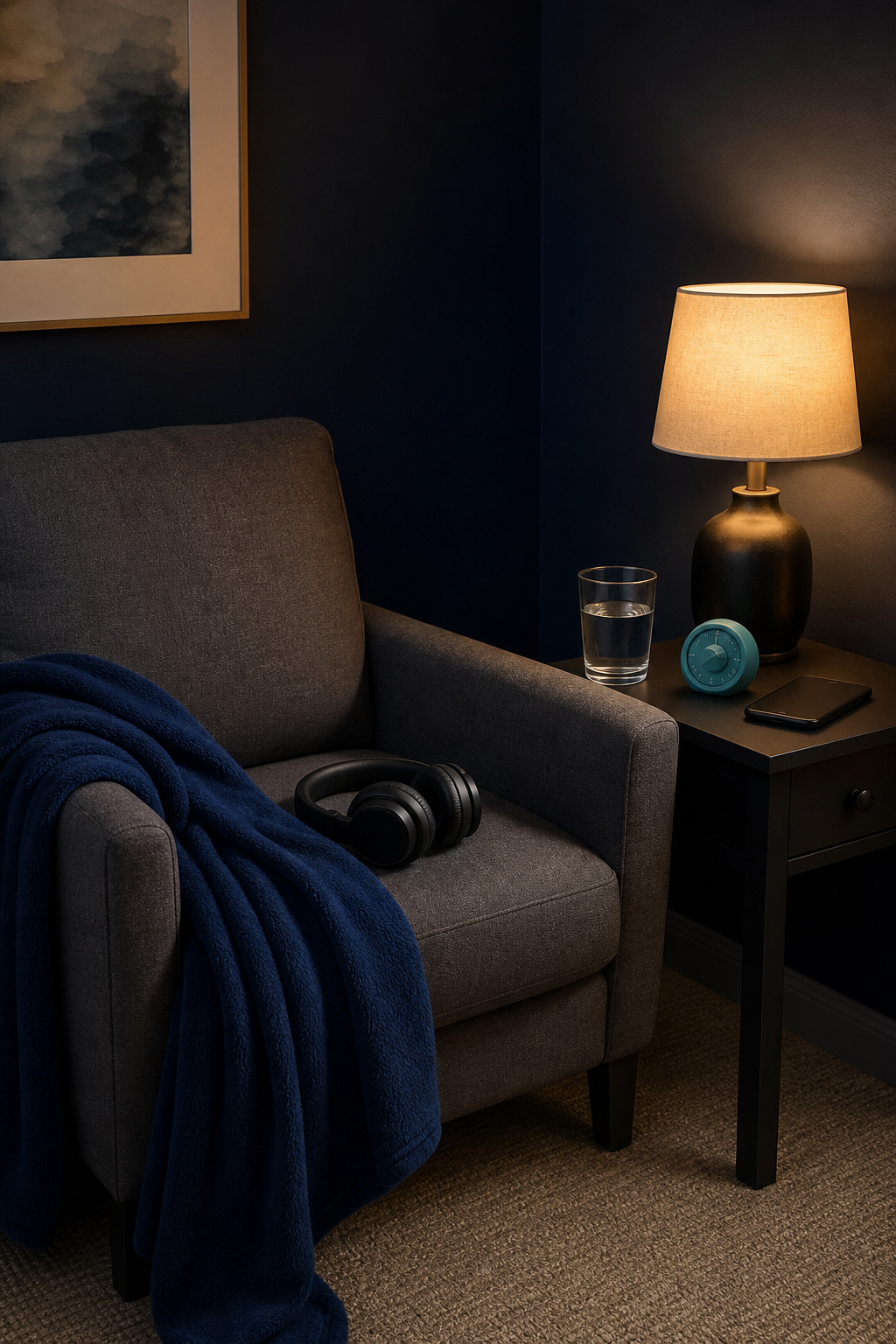
Turn off one bright lamp, move away from a screen, use a softer room, or take a brief outside pause if that is available and suitable for you.
Use headphones, familiar audio at a gentle level, a quieter room, one closed door, or a break from a conversation when you can take one.
Choose water, a simple snack, a shower, a familiar outfit, one safe surface, or a short rest instead of creating another list of things to decide.
Use a simple holding line when appropriate: "I need a few minutes before I can answer that." Then return with the smallest necessary response or next action.
Leave the item, note, timer, or object that tells you what to do after the break. The return cue protects the rest from becoming an open loop.
Sensory relief is a real part of the system
It is easy to frame overstimulation as a personal failure to tolerate ordinary life. A more practical approach is to treat the environment as part of the workload. If noise, switching, screens, pressure, or social demands are high, the next task is often not another productivity method. It is making one layer of the environment less expensive.
Use the smallest version that fits the setting. At home, that may be a lamp change and a softer chair. At work or in public, it might be water, one quiet minute, headphones, a bathroom break, a lower-screen moment, or postponing one nonessential decision. The reset is about a little more room, not a perfect escape.
This is an educational organization tool, not medical, mental-health, diagnostic, or treatment advice. Use appropriate professional or emergency support for any situation that needs it, and follow the relevant instructions for your health, work, school, or care setting.
When the energy floor keeps dropping under ordinary demand
Book 7 builds the wider energy and recovery system.
This reset reduces one overloaded moment. Burnout Without the Breakdown adds energy budgets, warning signs, shutdown rituals, demand reduction, boundaries, and recovery loops for the longer pattern.
FAQ
What is sensory overload with ADHD?
It is a common way to describe a moment when light, sound, screens, textures, people, demands, or multiple inputs feel like too much to process. A useful first step is often to reduce one input and lower the number of decisions required in the next few minutes.
What can I do when I feel overstimulated with ADHD?
Start smaller than a full recovery plan: change one input, meet one ordinary body need, take a short break from new decisions when possible, and leave one visible cue for the next thing.
How long should an ADHD sensory reset take?
Use a short, realistic window such as the next few minutes or the next part of a transition. The goal is not to force yourself back to normal on a schedule; it is to make the immediate environment and next decision less costly.
Is this medical or mental-health advice?
No. This is an educational organization tool, not medical, mental-health, diagnostic, or treatment advice. Use appropriate professional or emergency support for any situation that needs it.