Dopamine Friendly
Dopamine Friendly Systems
ADHD-friendly books and practical tools built around visible starts, close rewards, reset points, and systems that still work on uneven days.
Dopamine Friendly Systems is a practical ADHD book series and tool library by Mateusz Karpinski. The core idea is simple: a system should help your brain find the next useful step before the day turns into panic, avoidance, scrolling, spending, sugar, or shutdown.
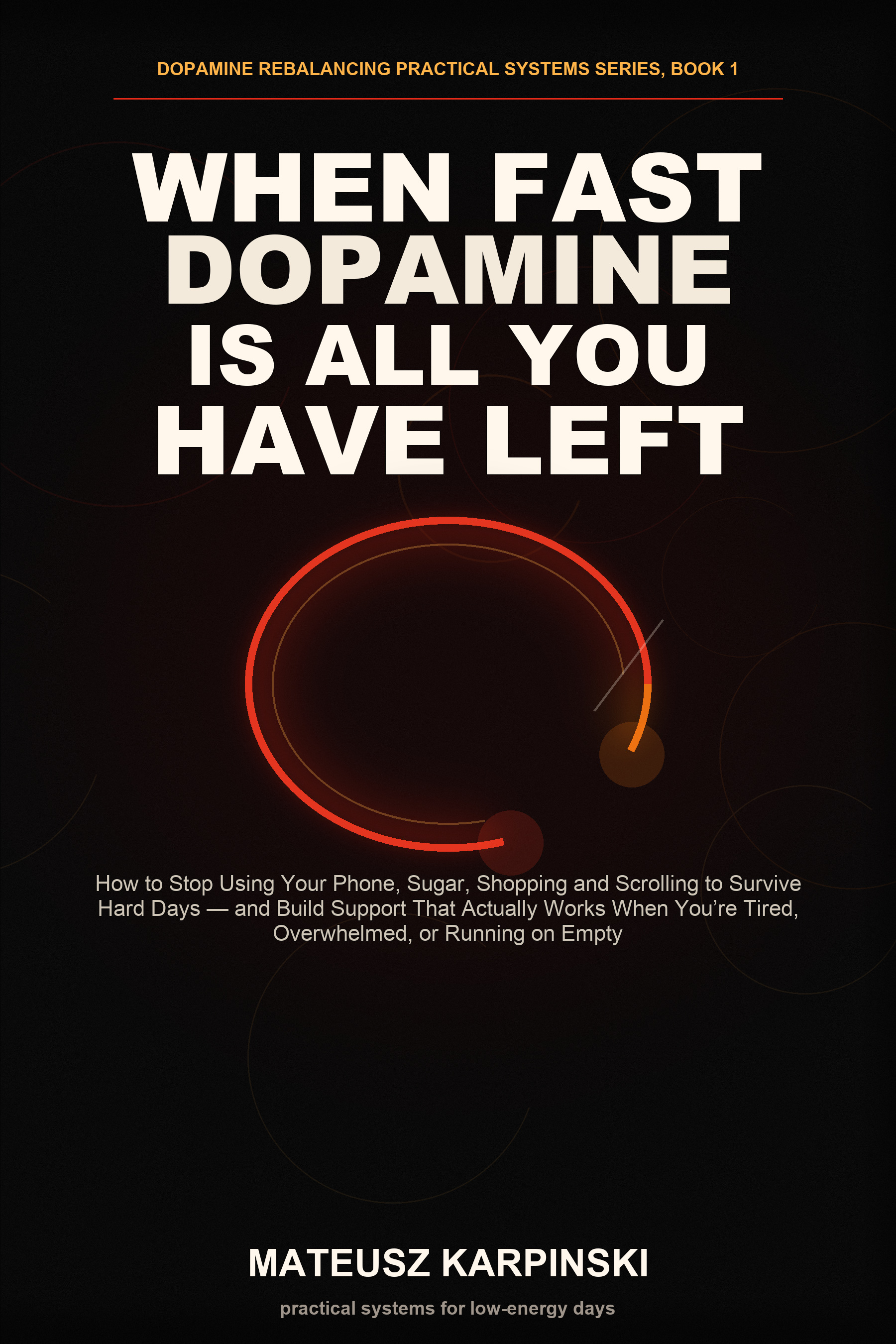
Best first buy for fast reward loops
Start with Book 1 when quick relief is carrying the day.
Pick this one first if phone loops, sugar, shopping, scrolling, bedtime drift, or low-energy reward seeking keep becoming the only visible way to get through the moment.
What Dopamine Friendly Systems is
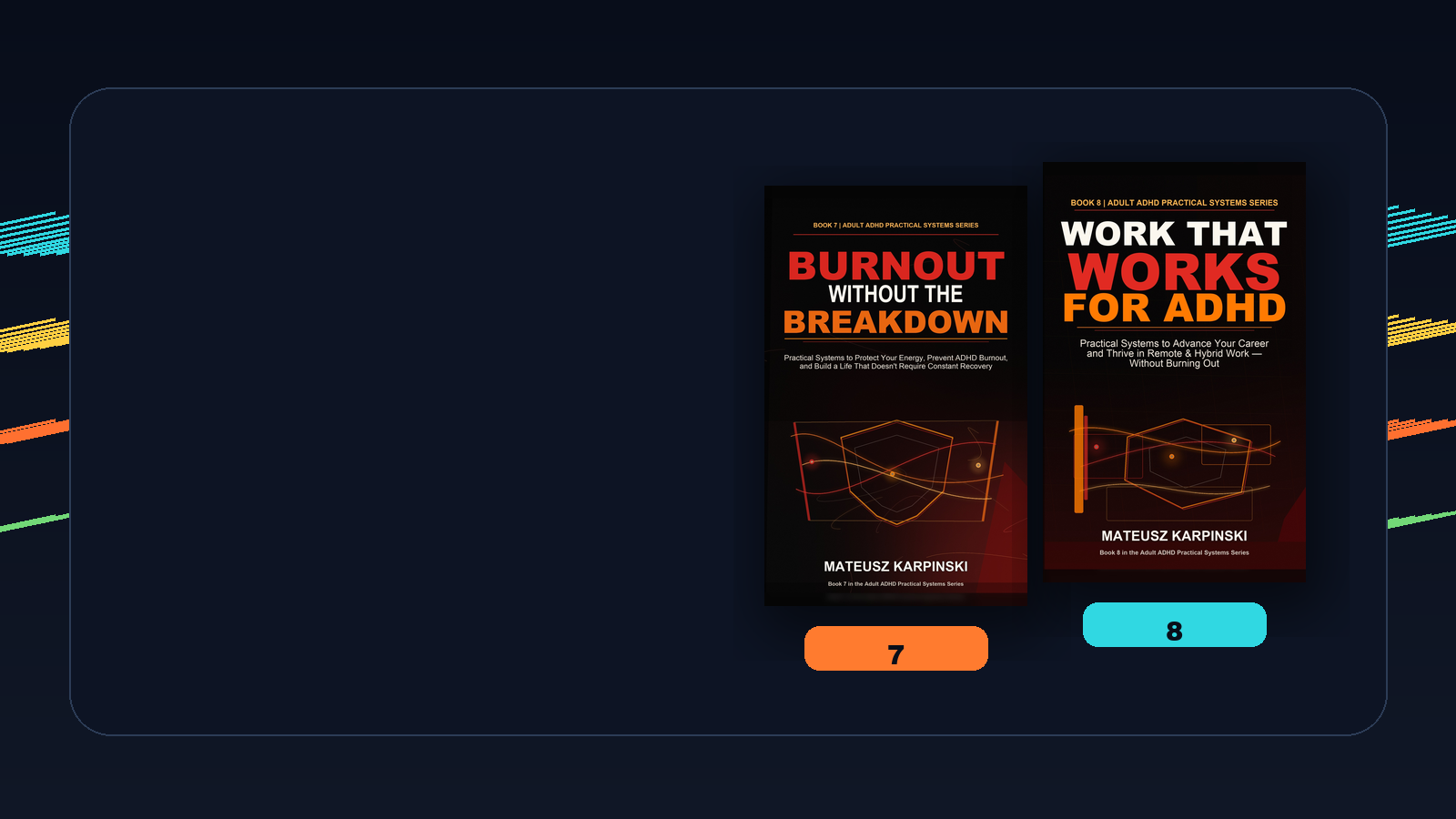
The site is built for adults who already know the usual advice but need systems that survive real energy, real interruptions, and real reward loops. The books cover time blindness, task initiation, burnout, work, money, relationships, family load, focus, energy, and fast dopamine habits.
The tone is practical rather than heroic: visible next actions, low-friction starts, body-first resets, close rewards, and restart points for the moment a plan slips.
A practical definition
At Dopamine Friendly Systems, a dopamine-friendly system is a low-friction support that makes the next useful action easier to see, easier to start, and easier to come back to after interruption.
That can mean visible time, smaller task starts, built-in rewards, body-first resets, money pauses, recovery loops, or replacement rewards for phone, sugar, shopping, and scrolling habits. The point is not to become more disciplined by force. The point is to build a system your brain can actually use.
Dopamine friendly is not medical advice and it is not a promise to "boost dopamine." It is a design principle for everyday routines, books, prompts, and reset systems.
What makes a system dopamine friendly?
The start is small enough to find
A useful system leaves one visible first move when you are tired, distracted, late, overwhelmed, or already avoiding the task.
The reward is close enough to matter
Waiting until everything is finished can backfire. Dopamine-friendly systems add small rewards, progress signals, and completion cues earlier.
The system expects interruption
Real days break plans. A dopamine-friendly plan includes restart points, buffers, and re-entry notes instead of treating interruption as failure.
The body is part of the plan
Hunger, fatigue, sensory overload, stress, and transition friction are not side issues. They shape whether a system is usable.
How the book series fits the idea
Each book takes one common ADHD pressure point and turns it into a set of external supports. If you are not sure where to start, use the reading path instead of trying to choose from the whole shelf.
- Choose the first Dopamine Friendly book by problem.
- Start with fast dopamine loops if phone, sugar, shopping, scrolling, or easy rewards are carrying the day.
- Start with time management if time blindness, late starts, or invisible days are the main pressure point.
- Start with executive function if decisions, working memory, and follow-through keep breaking the plan.
Dopamine friendly vs. dopamine detox
Dopamine friendly is not the same as dopamine detox. A strict removal plan can sound clean on paper but fail when the day has no gentler support. Many fast rewards are trying to do a job: relief, novelty, comfort, escape, control, movement, or connection.
A dopamine-friendly approach asks a better question: what is this reward doing, and what lower-cost support could do the same job with less fallout? That is why this site covers replacement rewards, dopamine menus, phone loops, sugar cravings, bedtime procrastination, and ADHD-friendly routines.
Why ADHD changes the system
Adults with ADHD often already know what they "should" do. The hard part is usually activation, timing, transitions, working memory, emotional friction, and follow-through. A system that only works on your best day is decoration.
Dopamine-friendly ADHD systems move executive function out of your head: visible steps, scripts, prompts, buffers, close rewards, body resets, and clear ways to restart after the plan slips.
Start with the pressure point
- If time disappears, start with visible time and buffers.
- If tasks will not start, lower the entry point and name the first move.
- If fast rewards are carrying the day, map the reward job before removing the loop.
- If burnout is building, protect energy before recovery becomes the whole plan.
- If money, work, family, or relationships feel loud, use scripts and external systems.
FAQ
What is Dopamine Friendly Systems? Dopamine Friendly Systems is a practical ADHD book series and tool library by Mateusz Karpinski. It focuses on visible starts, close rewards, reset points, and low-friction systems for real uneven days.
What does dopamine friendly mean? Dopamine friendly means a system is built around reward, motivation, energy, attention, and low-friction starts instead of shame, panic, or perfect self-control.
Is dopamine friendly the same as dopamine detox? No. Dopamine friendly does not mean removing every reward. It means designing better support and lower-cost rewards so daily systems are easier to use.
Why does dopamine friendly matter for ADHD? ADHD can make time, motivation, transitions, reward, and follow-through harder to manage. Dopamine-friendly systems make the next useful step easier to notice and start.
Which Dopamine Friendly book should I start with? Start with the pressure point in front of you: time blindness, task starts, fast reward loops, burnout, work, money, relationships, family load, focus, or energy. The reading path helps match the book to the problem.